Future Coding & Data Science Skills for Students
Build Future-Ready Coding &
Data Science Labs for Schools
Hands-on coding environments aligned with NEP 2020 to develop computational thinking, programming skills, and data literacy — building tomorrow's digital innovators today.
What Students Learn in the Lab
Six core competency areas structured to build progressive digital fluency — from foundational logic to applied data science.
Coding Fundamentals
Variables, loops, conditionals, functions — the building blocks of computational thinking taught through hands-on exercises.
Programming Languages
Structured exposure to Python, HTML/CSS, and introductory JavaScript across graded difficulty levels.
Data Analysis
Working with real datasets — sorting, filtering, aggregating, and drawing conclusions from structured data.
Data Visualization
Creating charts, graphs, and visual data stories using tools aligned with industry-standard practices.
AI Basics
Introduction to machine learning concepts, how AI models learn, and real-world AI applications for beginners.
Problem Solving
Structured problem decomposition, debugging mindset, and algorithm design for real-world challenges.
Why Schools Need a Coding & Data Science Lab
Six compelling reasons to integrate coding and data science infrastructure into your school today.
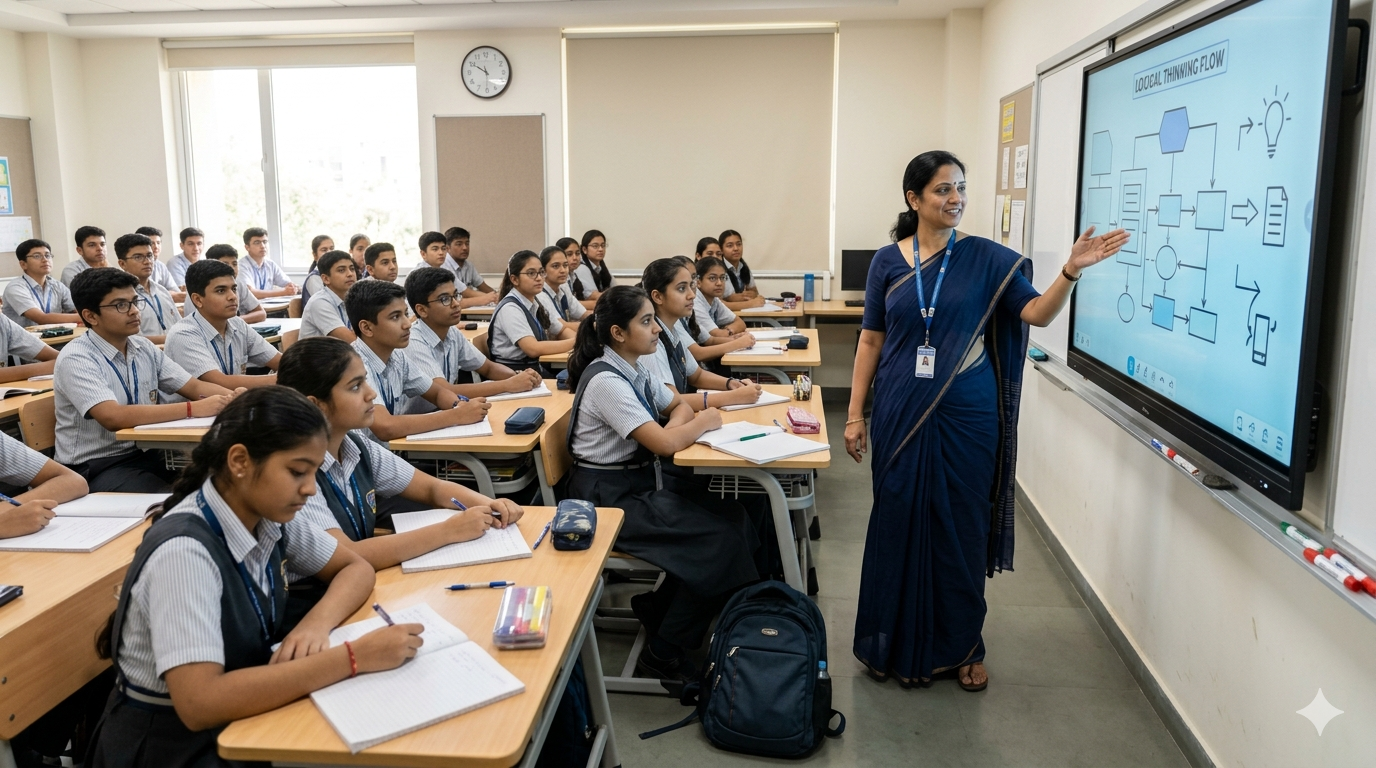
Logical Thinking
Students develop structured, sequential reasoning — a transferable skill across all subjects and career paths.
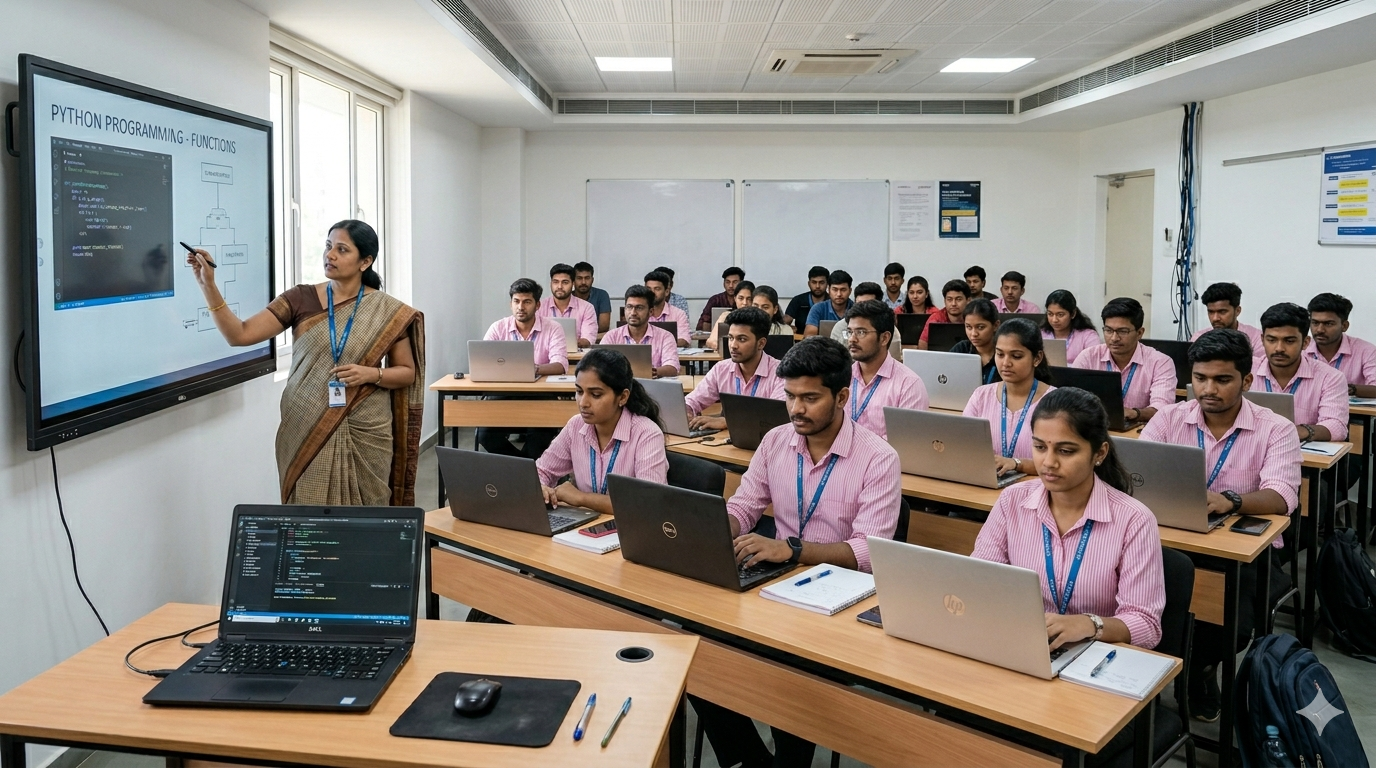
Programming Skills
Practical coding experience prepares students for engineering, sciences, finance, and every modern profession.
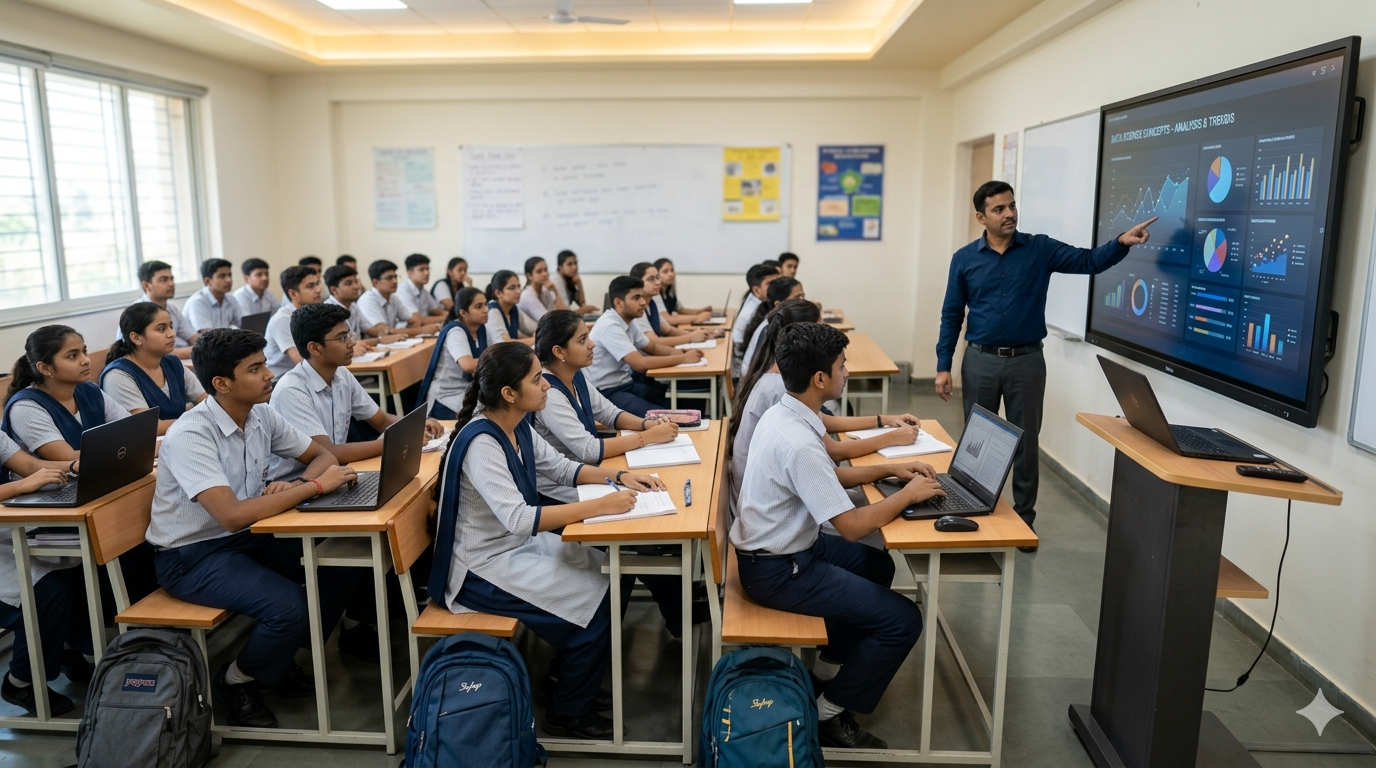
Real Data Exposure
Labs use real-world datasets to make learning contextually relevant and immediately applicable beyond the classroom.
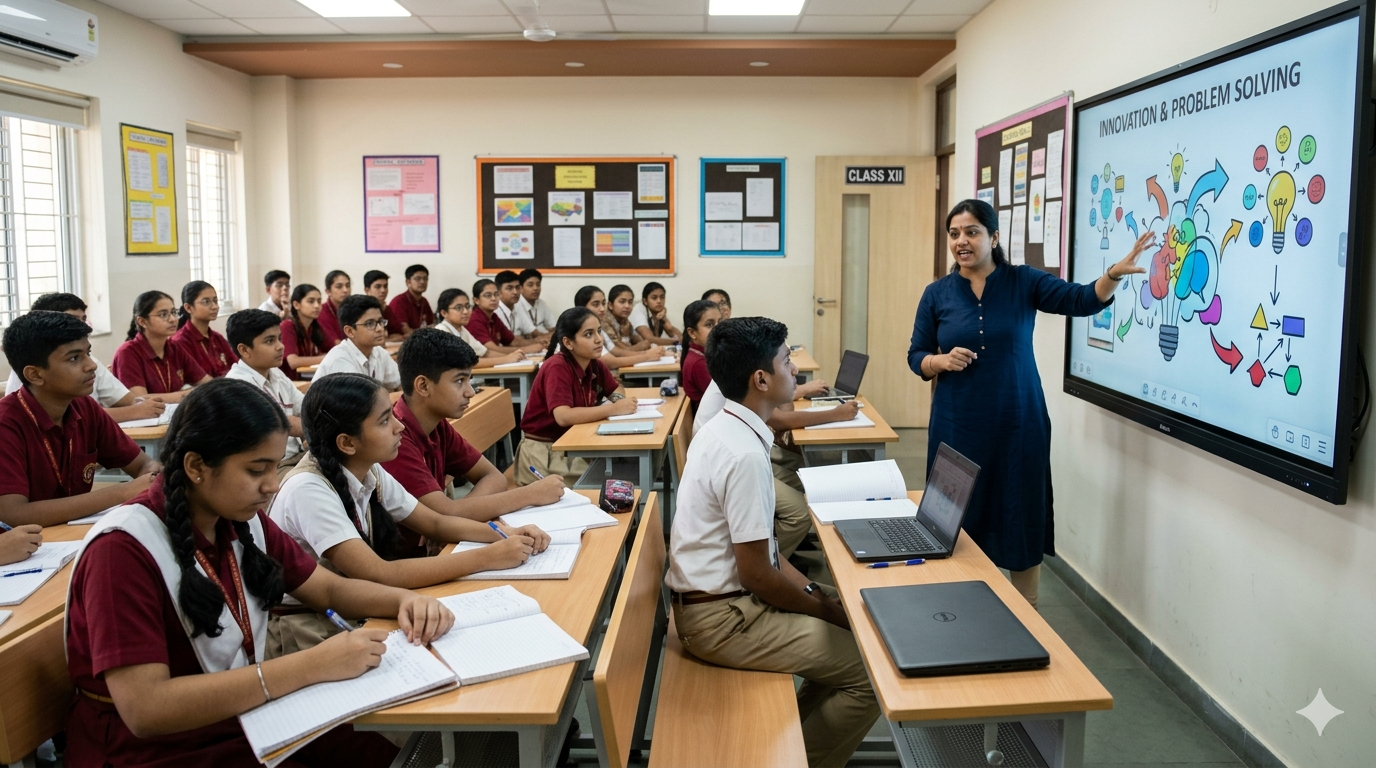
Innovation Mindset
Students shift from passive consumers of technology to active creators — building, experimenting, and iterating.
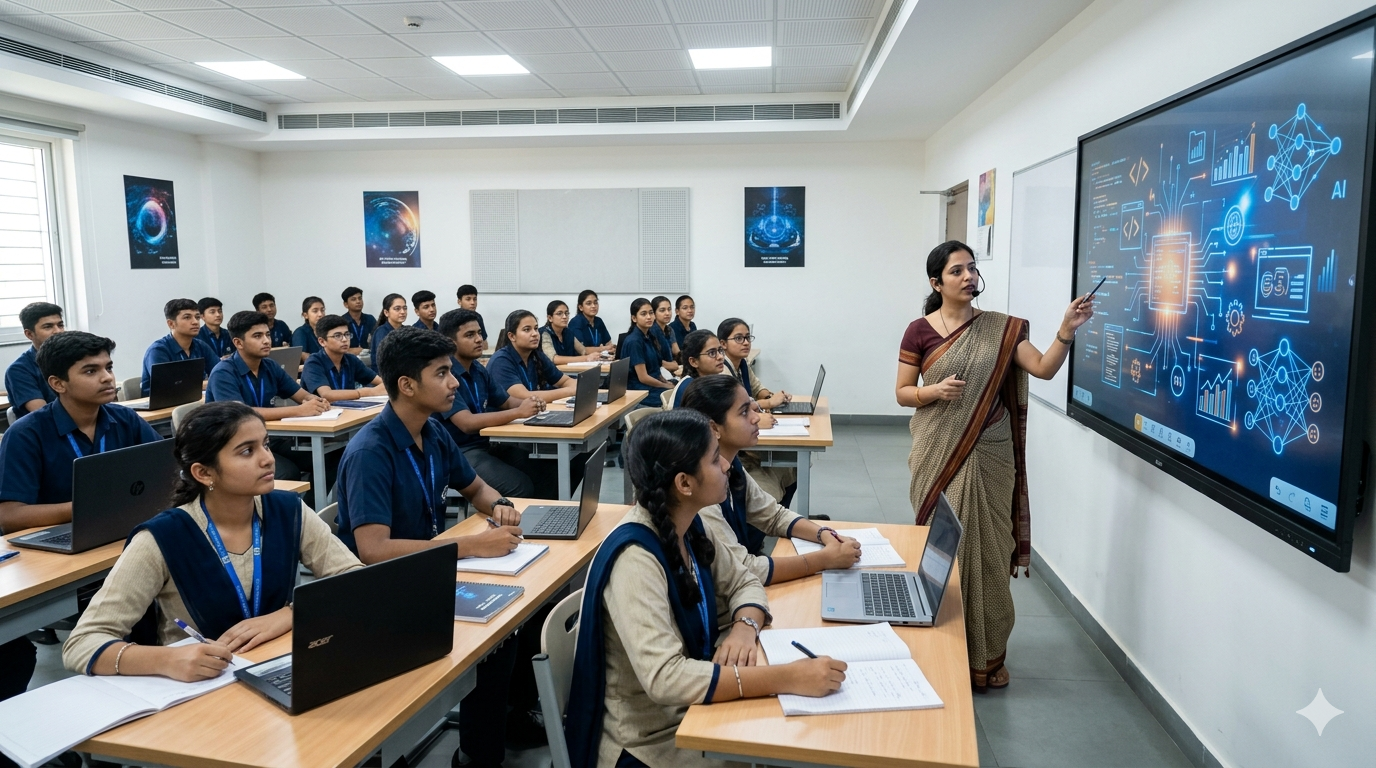
Career Readiness
Direct alignment with industry-required skills in software, data analytics, AI, and digital infrastructure roles.
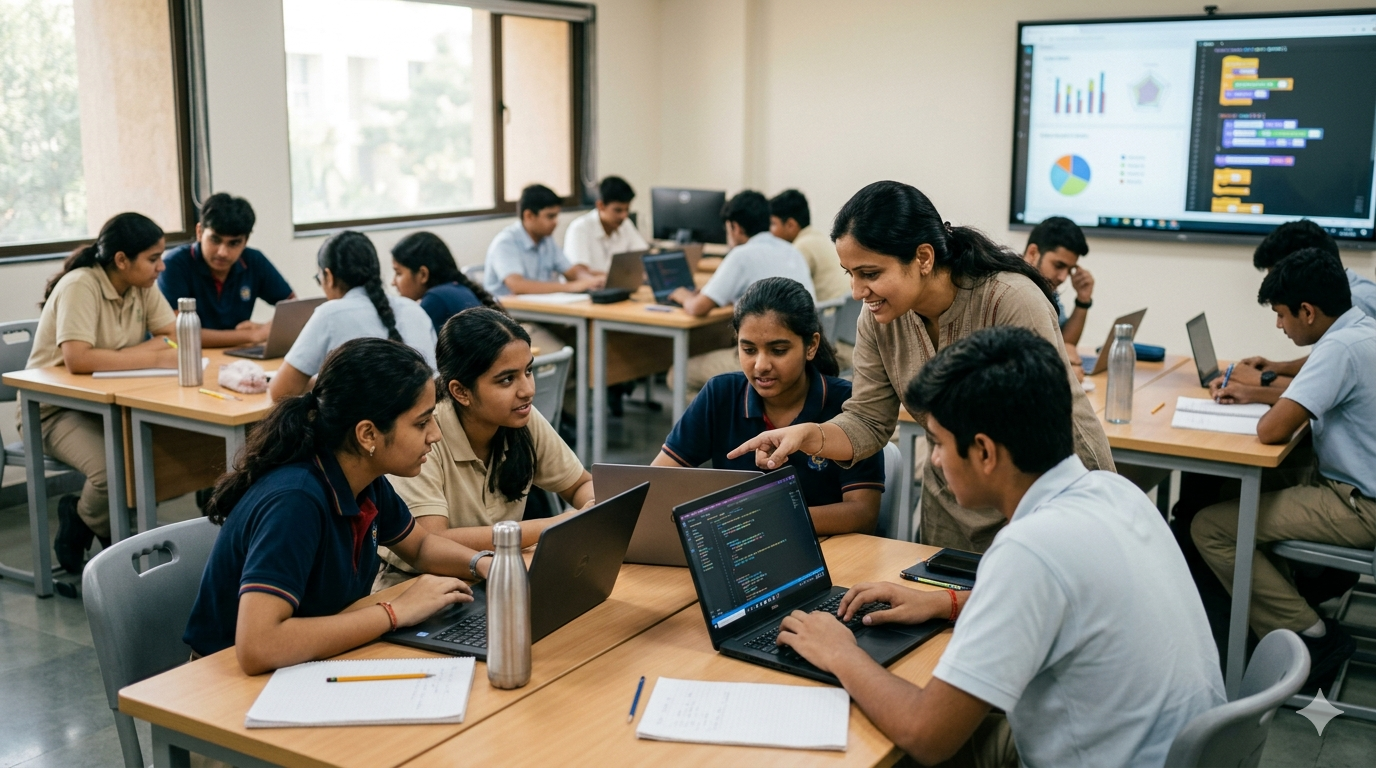
Collaborative Learning
Pair programming, team projects, and code reviews build communication and teamwork skills alongside technical ones.
Curriculum Framework
Three progressive levels — each designed for specific grade bands. Click any card to explore full curriculum details.
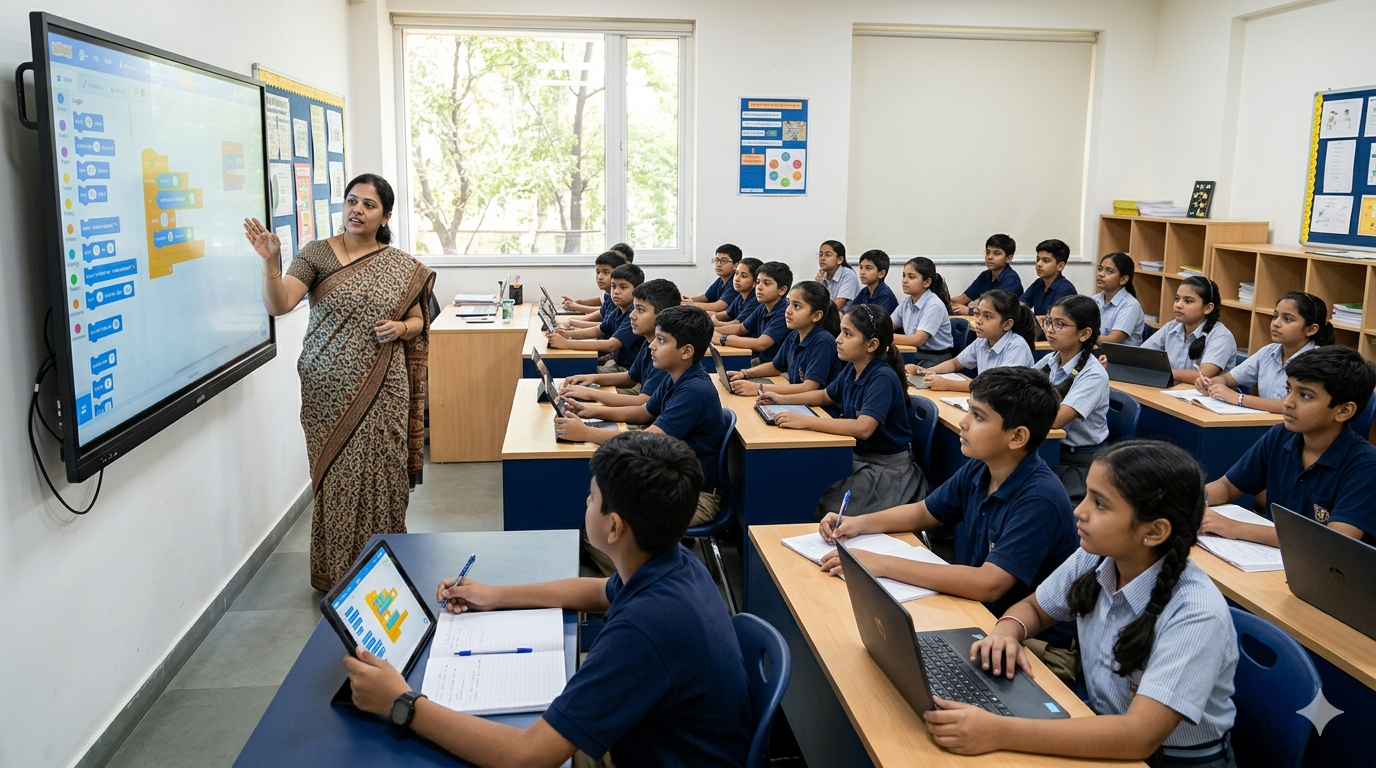
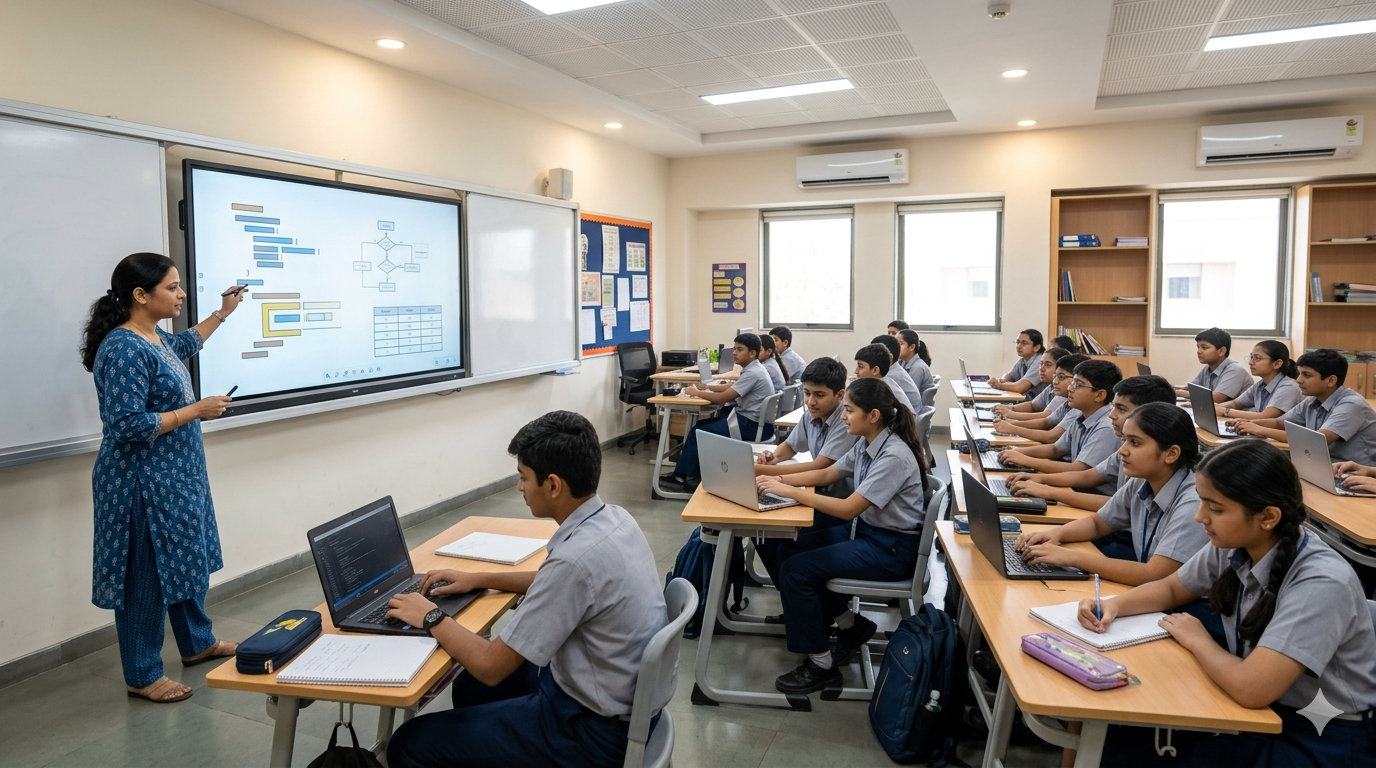
Computational Thinking & Block Coding
Introduces logic-first programming through visual tools and interactive challenges.
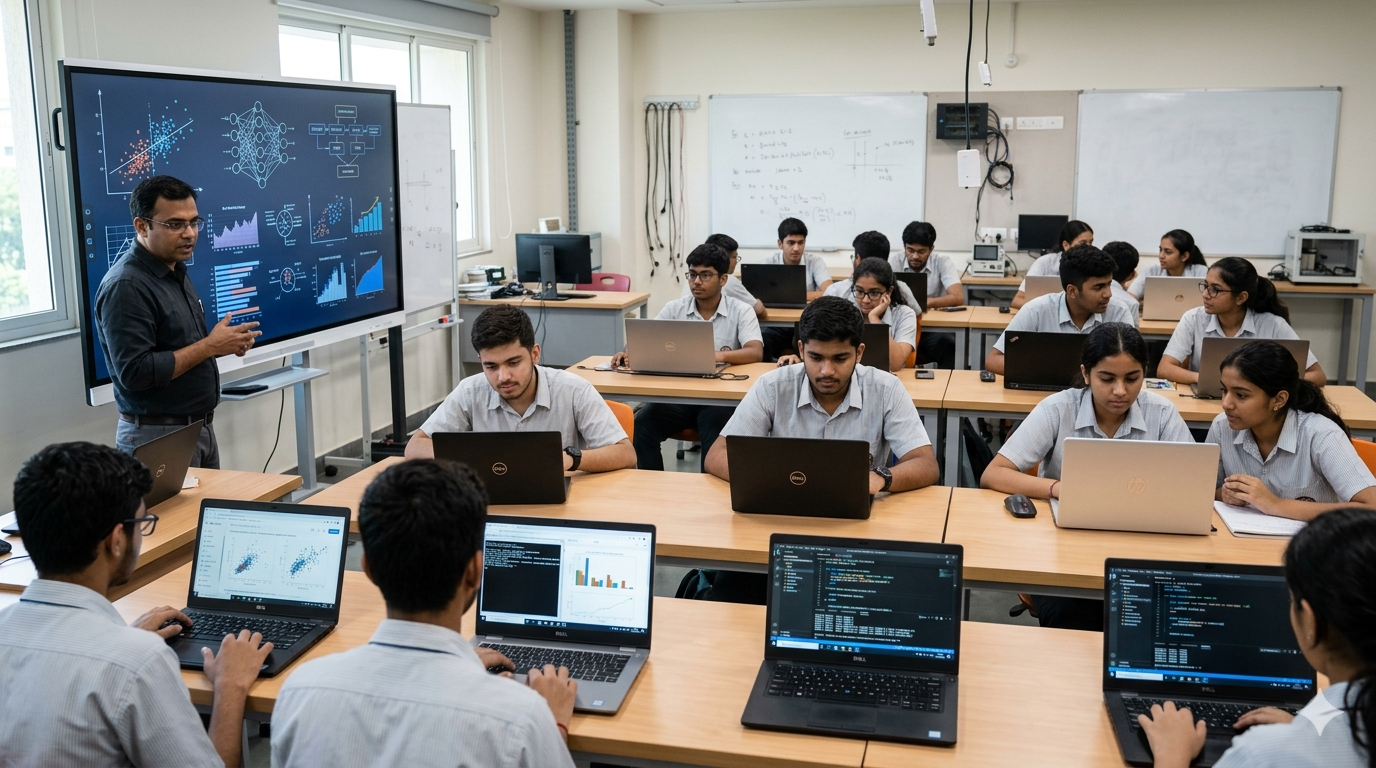
Text Programming & Data Basics
Transitions students to text-based programming and introduces structured data handling.
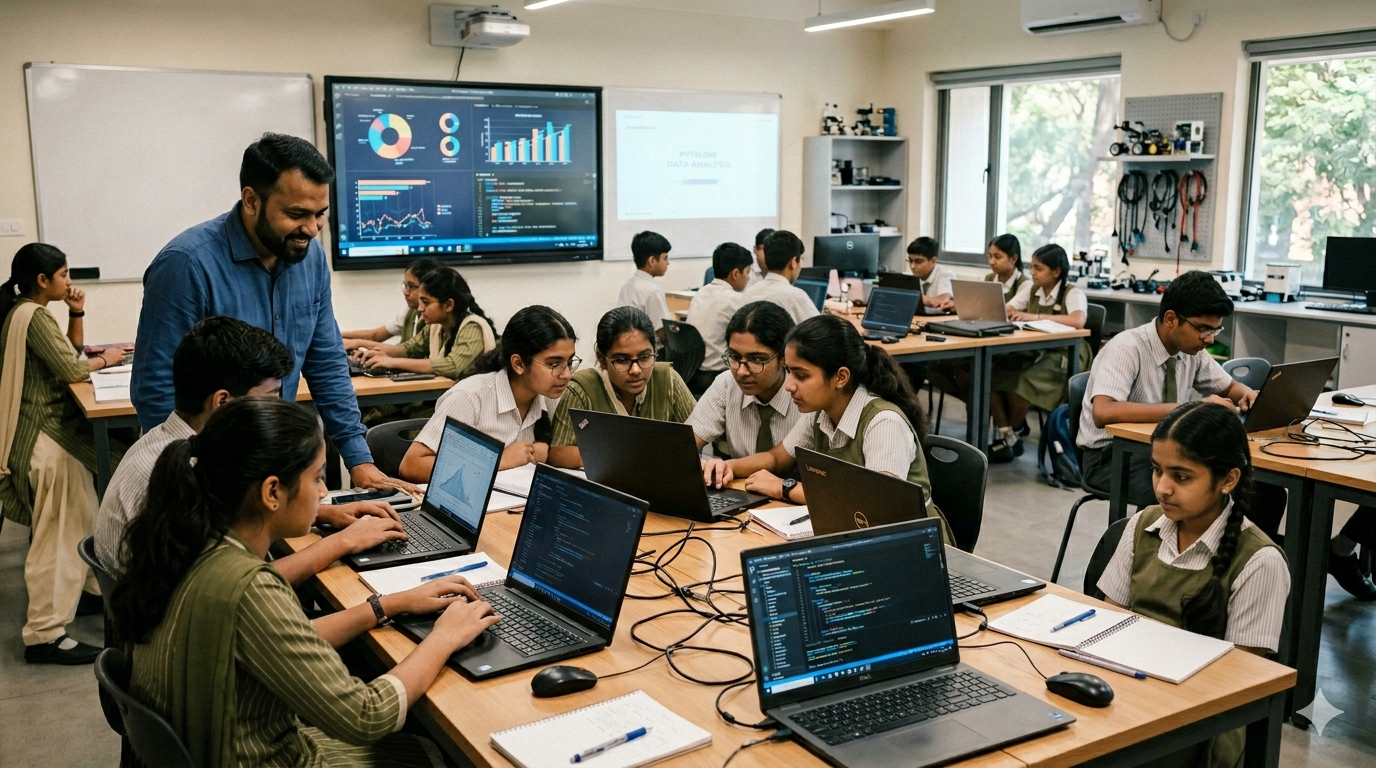
Data Science & AI Introduction
Applies programming to real data science workflows and introduces machine learning fundamentals.
Aligned with NEP 2020
Supports coding, computational thinking, and multidisciplinary digital learning from middle school.
What We Set Up
End-to-end hardware and software provisioning — everything required to run a fully functional lab from day one.
💻 Hardware Provisioning
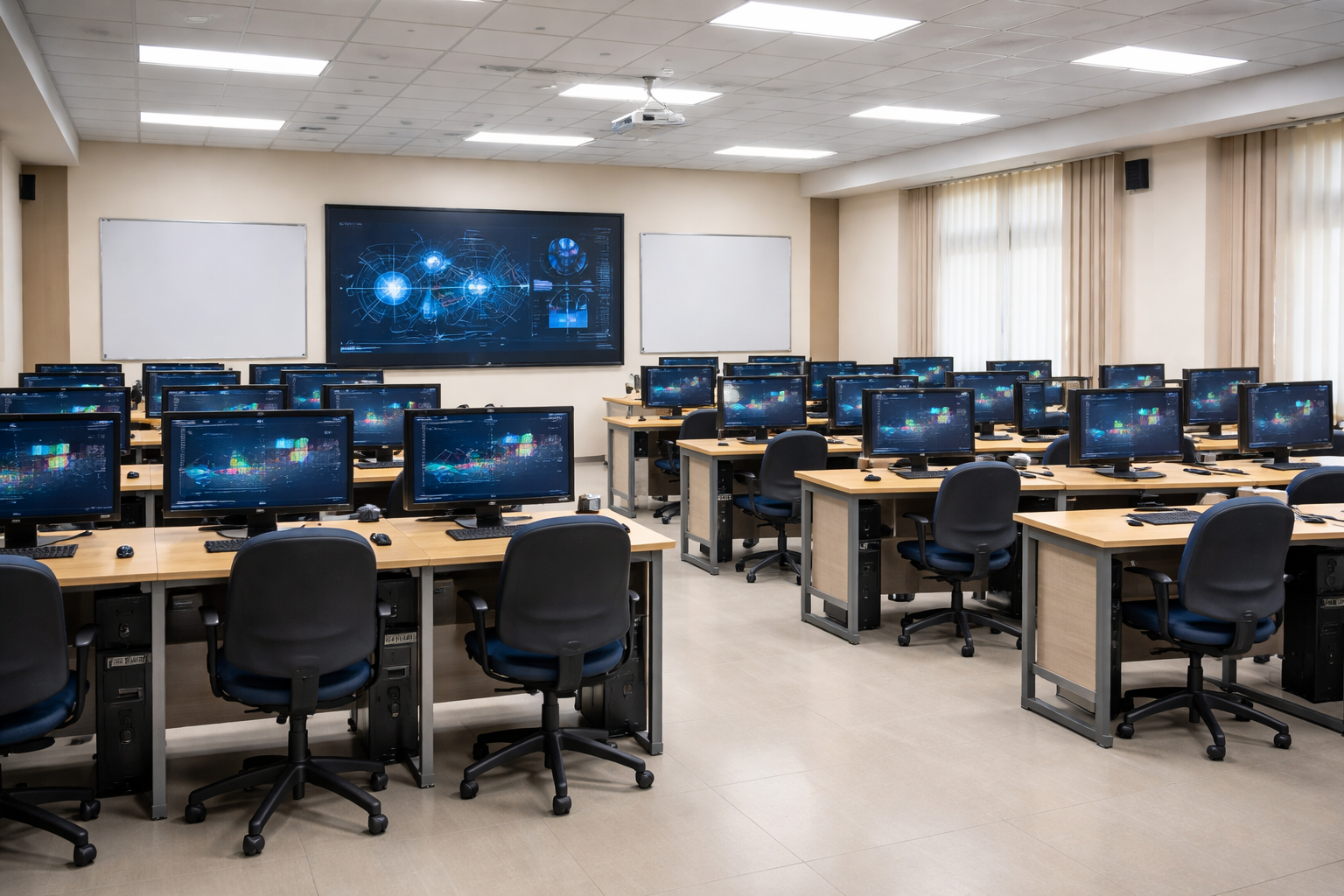
- High-performance student workstations (30+ nodes)
- Teacher demonstration system with smart board
- LAN networking with server or cloud-hosted LMS
- UPS power backup for uninterrupted sessions
- Ergonomic lab furniture for students & teacher
- CCTV & lab management display panels
- Peripheral accessories: mouse, keyboard, headsets
⚙️ Software & Platform Stack
- Python environment (Anaconda / Jupyter Notebooks)
- Scratch / MIT App Inventor for foundational learners
- VS Code or Thonny for text-based programming
- Data tools: Excel, Google Sheets, Tableau Public
- LMS integration (Moodle / custom portal)
- Curriculum content library with 300+ exercises
- Assessment & auto-grading module
What Makes Our Lab Different
Purpose-built for school environments — not repurposed consumer software or generic IT setups.
NEP 2020 Aligned Curriculum
Every module maps to NEP 2020 mandates for coding and computational thinking at each grade level.
Hands-On Coding Projects
Students build real deliverables — mini-apps, data dashboards, and automation scripts, not just exercises.
Data Science Modules
Grade 10–12 curriculum includes data wrangling, visualization, and introductory statistical analysis.
AI Introduction Track
Age-appropriate AI literacy: how models learn, bias in data, and practical AI tool exploration.
Teacher Training Program
Comprehensive upskilling for school faculty — no prior coding experience required to get started.
Hackathons & Competitions
Annual inter-school coding competitions and data challenges to sustain student motivation.
Teacher Training Process
We don't just set up labs — we build lasting capacity in your faculty to independently run them, year after year.
Assessment
Baseline evaluation of existing teacher digital skills to tailor the training program appropriately.
Workshops
3–5 day intensive workshop covering curriculum delivery, tools usage, and classroom lab management.
Mentoring
Ongoing fortnightly mentoring sessions during the first academic semester after lab launch.
Ongoing Support
Dedicated helpdesk, resource library access, and annual refresher workshops for all lab teachers.
Benefits at a Glance
Tangible, measurable outcomes for both students and your institution — visible from the first academic term.
🎓 Empowering Every Student
From building real coding projects to competing in national hackathons — students leave with tangible skills, certificates, and career clarity.
- ✓Real coding projects for college applications and portfolios
- ✓Early exposure to data science and AI career tracks
- ✓Improved logical reasoning and mathematics performance
- ✓Industry-recognized skill certificates on completion
- ✓Participation in national coding competitions and hackathons
- ✓Problem-solving skills applicable across all subjects
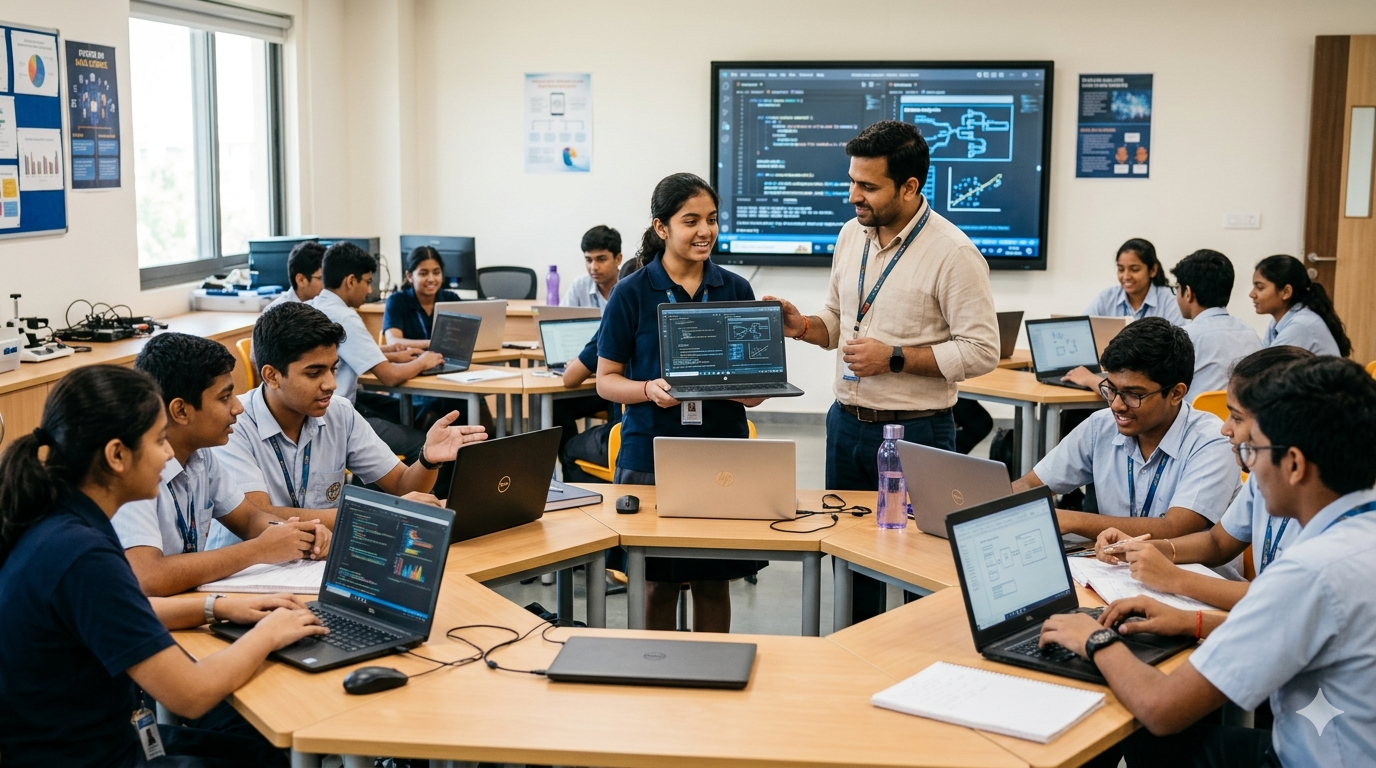
🏫 Transforming Your Institution
Full NEP 2020 compliance, competitive advantage in rankings, and a self-sufficient faculty — without needing an internal IT team.
- ✓Full NEP 2020 compliance for digital skill mandates
- ✓Competitive advantage in school rankings and admissions
- ✓Trained faculty with zero dependence on outside vendors
- ✓Turnkey setup — no internal IT team needed for deployment
- ✓Annual reporting and impact data for NAAC and trustees
- ✓Scalable infrastructure expandable as student strength grows
How We Implement
A proven four-phase rollout that gets your lab operational with zero disruption to academic schedules.
Assessment & Planning
Site visit to evaluate existing infrastructure, space, power availability, and connectivity. Custom lab blueprint delivered within 5 working days.
Procurement & Setup
Hardware sourcing, delivery, installation, and networking. Software stack deployed and tested across all student workstations. Average setup: 10–15 days.
Teacher Training & Curriculum Handover
3–5 day intensive faculty training with complete curriculum documentation, session plans, and assessment tools handover.
Launch & Ongoing Support
Official lab inauguration with student orientation. 12-month post-launch support including troubleshooting, content updates, and mentoring check-ins.
Ready to Build Your Smart Coding & Data Science Lab?
Join thousands of educators embracing the future of learning
📋 Get Detailed Proposal